Four Artists Who Shaped How I See
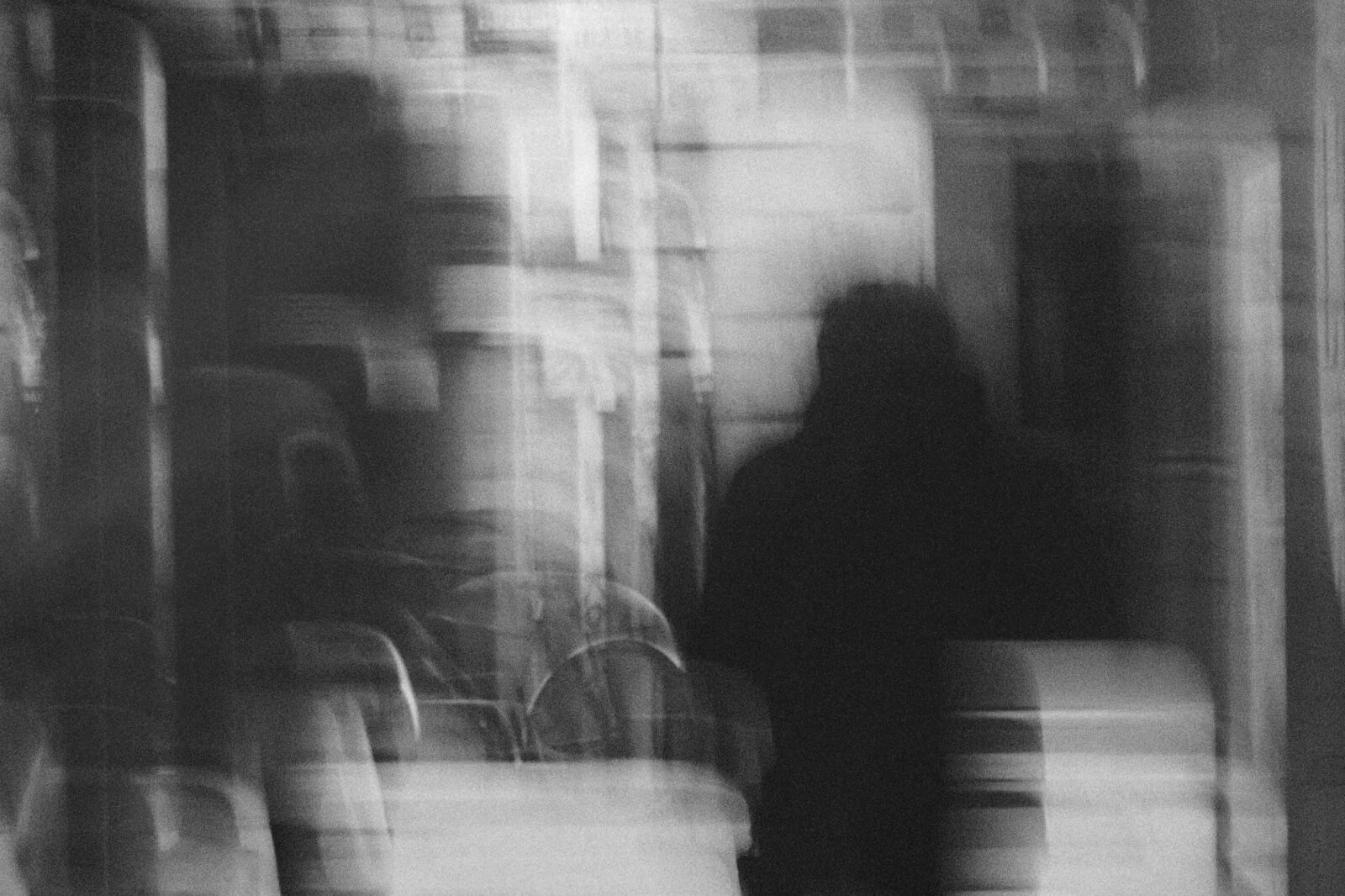
When people ask about my influences, I return to four visual artists whose work fundamentally changed how I approach image-making: Saul Leiter, Daido Moriyama, Olga Karlovac, and Gerhard Richter. Each taught me something different about atmosphere, about what happens when you refuse to make things easy for the viewer.
Saul Leiter: Seeing Through Layers
Leiter's work changed how I see the world around me. His New York street photography from the 1950s and 60s finds beauty in ambiguity rather than clarity. His images work through layers: reflections in wet windows, steam on glass, figures half-hidden behind umbrellas or car doors. Obscuring information can make an image more compelling than revealing everything.
What draws me to Leiter is his casual, almost accidental approach. He photographed the same few blocks around his apartment for decades, finding endless variations in ordinary scenes. There's a gentleness to his work, an unforced quality that comes from patient observation rather than aggressive pursuit.
His use of color is deliberate but never obvious. While other photographers avoided color as too commercial or superficial, Leiter treated it as essential to composition. A slash of red, a patch of yellow, a blue coat against gray pavement. Color acts as structure in his images, not decoration. For me, color can create atmosphere and emotion without sacrificing subtlety.
I see his influence when I'm walking through the streets, when I notice how fog softens edges or how light filters through layers. Like Leiter, I'm learning to find the image in what's already there, to let scenes reveal themselves rather than forcing them into being.
Daido Moriyama: When Flaws Become Intent
Moriyama's high-contrast, grainy black and white photography feels raw in a way that most work avoids. His images of Tokyo streets are often out of focus, overexposed, or printed so dark that details disappear into shadow. The technical "flaws" are the aesthetic.
Degradation is a creative choice. Grain, blur, and harsh contrast aren't mistakes to be corrected but tools for expressing something that clean, sharp images can't capture. His photography has an urgency, a sense that the camera is reacting to the world rather than carefully composing it.
When I work with slow shutters and deliberate motion blur, when I push contrast until figures become silhouettes, I'm pulling from what Moriyama demonstrates, that perfect technical execution can sometimes flatten the emotional impact of an image. Sometimes the grain is what makes it all real.
Olga Karlovac: Mystery as Honesty
The first time I saw Karlovac's work, I cried. Her black and white photography spoke to something I'd been afraid to explore in my own practice. For years, I believed I needed to explain everything to viewers, to make my images immediately readable. Karlovac showed me otherwise.
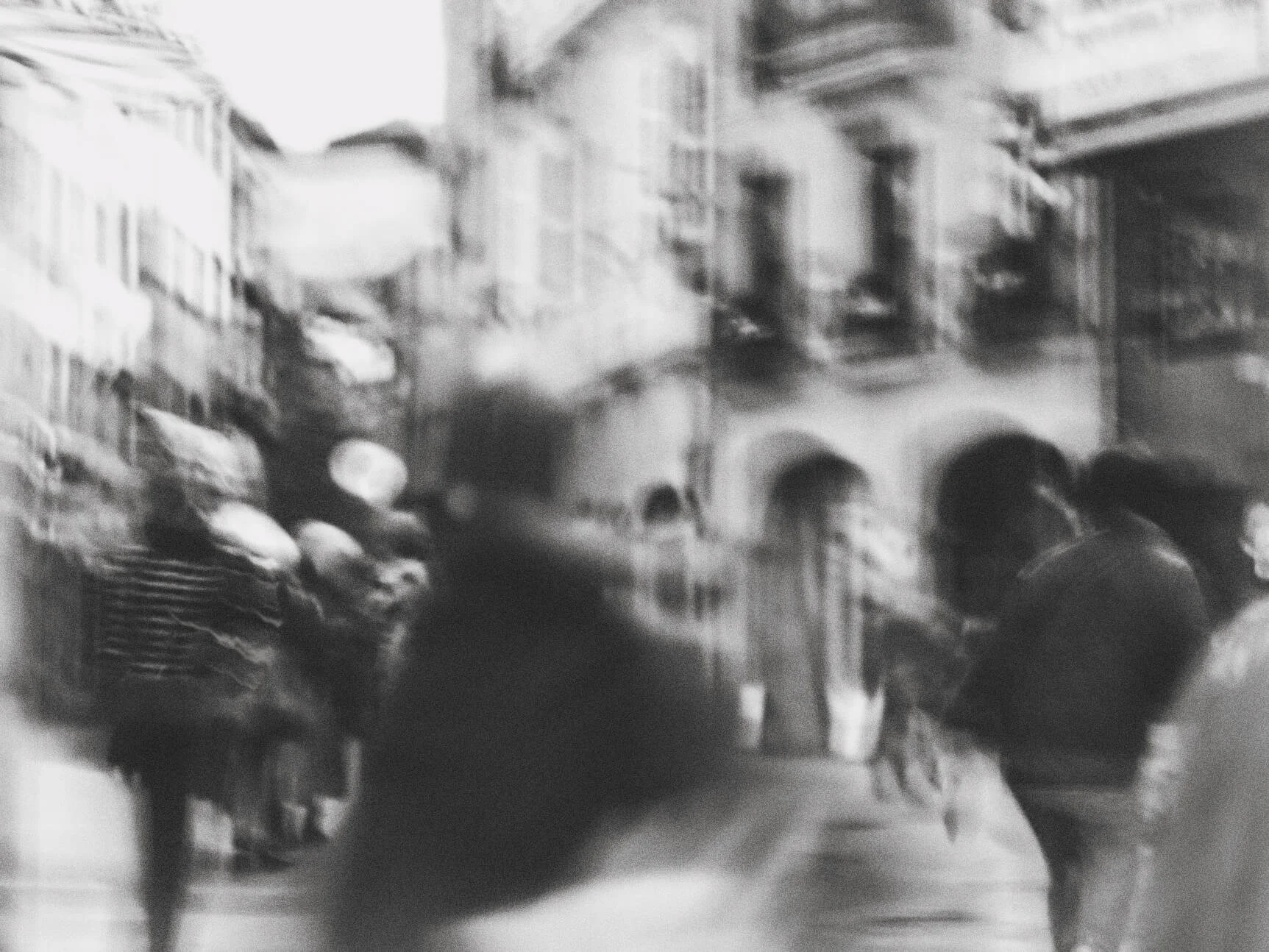
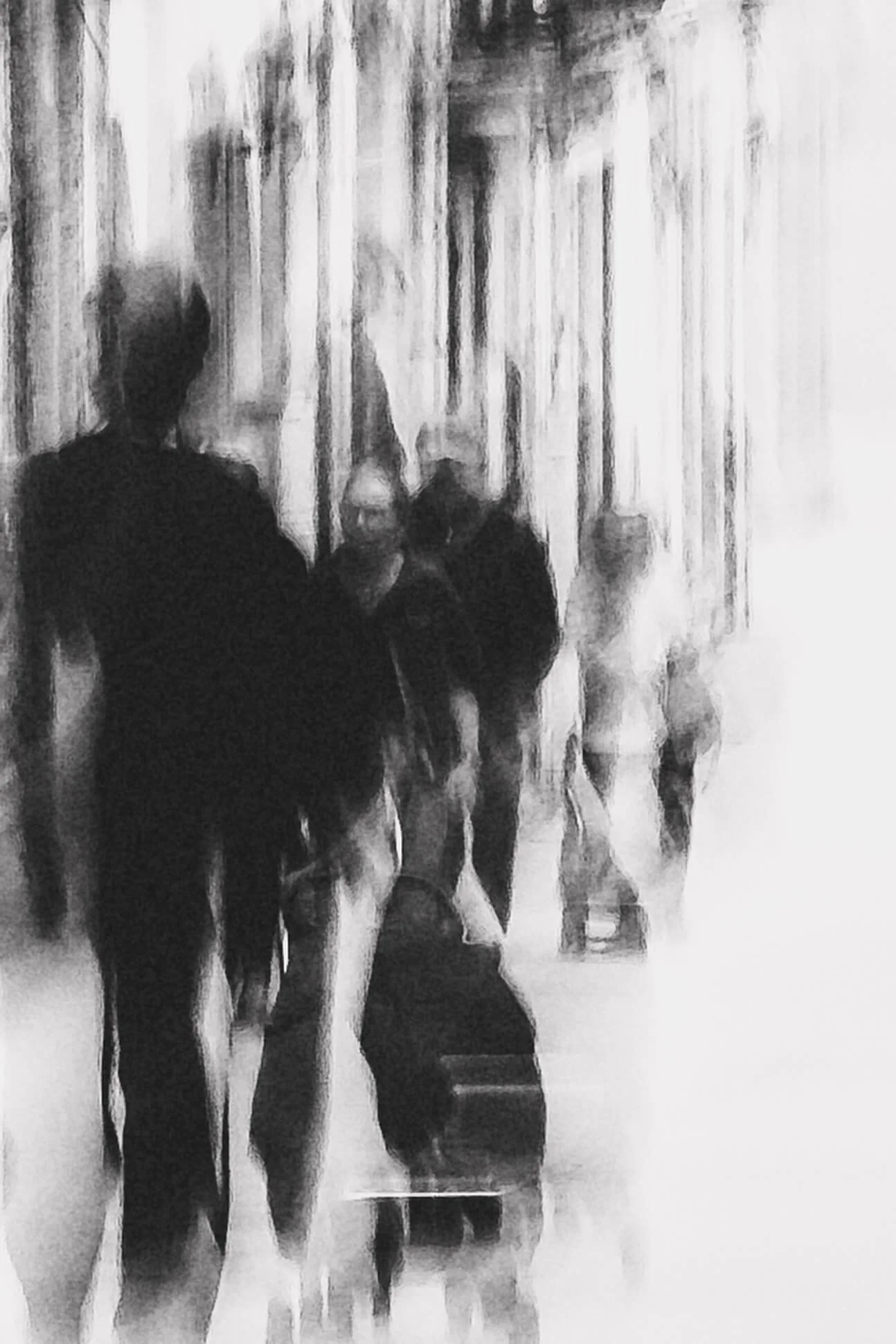
She shoots with intentional camera movement, using slow shutter speeds while on photo walks. Her images are created through motion, not post-processing. Figures turn into elongated silhouettes, streets dissolve into monochrome washes, solitary forms barely hold their shape against darkness. She photographs mostly at night, in rain and snow, during autumn and winter when the atmosphere matches what she feels.
What she captures isn't just blurred, it's emotionally honest. The technique emerged intuitively from how she sees and feels the world. Her work strips away the expectation that sharpness equals truth. Instead, her images prove that ambiguity can reveal more than clarity, that withholding information creates space for genuine emotional response.
This is what I'd wanted to do in my own work but never felt secure enough to attempt. Karlovac's creativity gave me permission to stop explaining, to trust that mystery isn't evasion but another form of truth. Her influence shows up when I'm using slow shutters to blur motion, when I'm working charcoal until forms fade into paper, when I choose to leave something unresolved rather than finishing it to complete legibility.
Olga Karlovac reminds me that we don't need to see everything clearly to feel its presence.
Gerhard Richter: Softening Reality
Richter isn't a photographer, but his blurred paintings from photographic sources have influenced how I think about my own work. He drags a dry brush across wet paint, softening edges until everything becomes equally important and equally unimportant. His technique removes hierarchy from an image.
What draws me to Richter is his reason for blurring. He said he blurs to make everything “equally important and equally unimportant”, to strip the image of anything that looks artistic or craftsmanlike. But elsewhere he admitted the blurring connects to his own relationship to reality: imprecision, uncertainty, transience. The technique and the confession point in the same direction. His paintings feel deeply human, full of uncertainty and loss. The opposite of the clinical surface he said he was after.
When I’m working with charcoal, watercolor, or oil pastel, I think about Richter’s approach to softening reality. The way he treats photographic sources (taking something sharp and definitive and rendering it ambiguous) parallels what I'm after in my own atmospheric work. He proved that blur isn't a mistake to be corrected but a valid way of seeing.
“It may look like I’m just pointing the camera at what’s in front of me. But I’m trying to photograph what people see, but don’t notice – something that’s mysterious and unknown in everyday life.”
— Daido Moriyama
Finding Your Own Language
These four visual artists encourage me to blur, to obscure, to leave things unresolved. They demonstrate that atmospheric work isn't about being vague for vagueness' sake, but about accessing something that sharp focus and perfect clarity can't reach.
I don't try to make my images like theirs, but they've taught me to trust my instincts when I'm drawn to scenes where details blur at the edges. They remind me that the edges of perception are worth exploring, that there's substance in what can’t clearly be seen.
Most of all, they give me the courage to work in ways that feel genuine and to find beauty in what I once overlooked.
View Their Work
Saul Leiter
Saul Leiter Foundation
Howard Greenberg Gallery
Daido Moriyama
Taka Ishii Gallery
MoMA Collection
Olga Karlovac
Official Website
Instagram
Gerhard Richter
Official Website
Marian Goodman Gallery
If something here resonated, send a note below.
